An address enters the Canon when it has endured across generations, remained recognisable without reinvention, and possesses a gesture, a space, or a ritual that Paris would lose if it disappeared.
Une adresse quitte le Canon quand elle cesse de se reconnaître.
Abraham-Louis Breguet established his workshop on the Quai de l'Horloge in 1775 — the street name itself a premonition. He sold watches to Marie-Antoinette, to Napoleon, to the Ottoman fleet. Le tourbillon, la sonnerie, le spiral Breguet : ce vocabulaire technique est français avant d'être suisse.
The museum at Place Vendôme — the house's contemporary address — is the only horological museum within Paris proper. It does not try to compete with Geneva or the Vallée de Joux. It does not need to. Breguet's claim is older and more specific: this is where the conversation began.
Breguet n'a pas une relation avec Paris. Breguet is a Parisian fact — like the Pont-Neuf, like the Opéra, like the Deux Magots. The city carries the watchmaker's name in its stones.
Cartier is the only maison whose watches are inseparable from the city itself. La Santos was born in Paris for a Brazilian aviator who had made the city his own (1904). La Tank was drawn in Paris, its form derived from the geometry of Renault tanks seen from above (1917). No other house has produced timepieces that carry the DNA of the city in their form.
L'horlogerie de Cartier n'est pas une extension de sa joaillerie. C'est une discipline parallèle — structurée autour de la géométrie plutôt que de la complication. The square, the rectangle, the Roman numeral: Cartier understood that time can be told architecturally.
The history is known: for decades, Cartier did not manufacture its own movements. It sourced, it assembled, it signed. Since 2010, the Manufacture de la Chaux-de-Fonds has changed the equation — Cartier now produces its own calibres. But the earlier truth persists in the DNA: ce qui fait un Cartier, ce n'est pas le calibre — c'est la ligne. And the line was always Parisian.
Tiffany understood something before anyone else: that the authority to choose is rarer than the ability to make. While the great manufactures perfected complications in Geneva and the Vallée de Joux, Tiffany built the most powerful editorial filter in American horology. A Patek Philippe bearing the Tiffany stamp on its dial does not carry two names. It carries a double authority — Geneva's mastery endorsed by New York's eye. Un pouvoir que personne d'autre n'a jamais obtenu.
The Nautilus Tiffany Blue of 2021 was not a collaboration. It was a demonstration. 170 pieces. $6.5 million at auction for a single watch. No technical innovation, no new movement, no complication — only a colour and a name. It proved that Tiffany's signature can transform an object's status as decisively as the hand that built it. Le bleu Tiffany est devenu, en une édition, le plus puissant argument culturel de l'horlogerie contemporaine.
À Paris, Tiffany holds a singular position among the great houses: it does not compete on manufacture. It presides over taste. The Patek Philippe Nautilus bearing the Tiffany stamp, the dual signature that no other retailer has obtained — this is not commerce. C\'est une autorité éditoriale exercée sur l\'objet lui-même. What Tiffany adds to a dial is not a name. It is a judgment — and the market has learned to trust it.
Patek Philippe est genevois. La précision l'exige : this is not a Parisian house. But the relationship with Paris is older than most Parisian institutions. The Nautilus (1976), drawn by Gérald Genta — the same hand that drew the Royal Oak — was designed for a world that moves between Geneva, Paris, and New York. Paris was always in the equation.
The Salon at Place Vendôme is not a boutique. It is an appointment. On n'y entre pas — on y est reçu. This distinction is Parisian by nature: the architecture of access matters more than the architecture of display.
The weakness: Patek's relationship to Paris remains that of a visitor, however distinguished. Geneva holds the manufacture, the museum, the archive. Paris holds the client. C'est une relation de respect mutuel — pas de propriété.
Jean Schlumberger did not begin with precious stones. He began with porcelain flowers salvaged from an old chandelier at the Marché aux Puces, which he turned into clips for his friends. Fils d’une famille textile alsacienne, il refuse la banque, refuse Berlin, et monte à Paris au début des années 1930 avec un carnet de croquis et aucune formation en joaillerie. C’est précisément cette absence de formation qui le rend libre.
Elsa Schiaparelli le remarque. She commissions buttons — porcelain cherubs, shells, insects — that transform her suits into conversations. Diana Vreeland, then at Vogue, sees the buttons and understands immediately : this is not fashion. This is sculpture, miniaturised.
The war intervenes. Schlumberger serves in the French Army, survives Dunkirk, joins de Gaulle’s Free French forces. In 1946, he crosses the Atlantic with his partner Nicolas Bongard — nephew of Paul Poiret — and opens a salon on East 63rd Street.
In 1956, Walter Hoving, chairman of Tiffany & Co., makes the offer that will define both the house and the artist : a private studio on the mezzanine of Fifth Avenue, unlimited access to the world’s finest gemstones, and complete creative freedom. Schlumberger becomes the first designer Tiffany ever allows to sign his work.
What follows is twenty years of the most inventive high jewellery of the twentieth century. The Bird on a Rock — a gemstone bird perched atop the 128.54-carat Tiffany Diamond — becomes the emblem of a philosophy : the stone serves the form, not the reverse. Les bracelets en émail paillonné — Crosillon, in turquoise, in coral, in cobalt — deviennent les “Jackie bracelets” when Jacqueline Kennedy wears them so often that the press gives them her name. Bunny Mellon, the woman who designed the Rose Garden, commissions him obsessively — her collection, now at the Virginia Museum of Fine Arts, is the largest Schlumberger archive in the world.
Schlumberger’s method is singular. He sketches on ultrafine tracing paper, in India ink, each piece conceived as a living form : a starfish that breathes, a seahorse in motion, a thistle that turns when the light shifts. La main est lente. Le résultat est vivant.
The French government names him Chevalier de l’Ordre National du Mérite in 1977. The Musée des Arts Décoratifs in Paris honours him posthumously in 1995 with “Un Diamant dans la Ville.”
Schlumberger dies in Paris in 1987 and is buried on the Isola di San Michele in Venice. But the work persists. Le grand public connaît le bleu Tiffany. Les connaisseurs connaissent Schlumberger. La différence entre les deux est la mesure exacte de ce que cette maison a choisi de ne pas montrer.
On ne pose pas un sac Hermès par terre. On le pose sur la banquette, à côté du manteau, face visible. No one taught this rule. Everyone follows it. Le maître d'hôtel sees the orange before he sees the face — and the evening is calibrated accordingly.
The hierarchy is silent and absolute.
L'orange Hermès is the summit — not because of what it costs, but because of what it reveals. The shape of the package betrays its contents. Un rectangle vertical, c'est un carré de soie. Un rectangle plus large, c'est un sac. And when the silhouette suggests a Birkin or a Kelly, the silence around the table shifts — imperceptibly, but it shifts. L'orange Hermès est le seul sac de shopping que les gens gardent et réutilisent. It has ceased to be packaging. C'est devenu un objet à part entière.
Le bleu Tiffany arrives with a different authority. Since LVMH assumed stewardship of the house, Bernard Arnault has redefined what the blue bag contains. Tiffany redevient synonyme de prestige — the era of the silver keyring is over. Le prix moyen d'une montre Tiffany a changé de registre. The blue bag on the banquette no longer says I bought a gift. It says I belong. Ce n'est plus une question de générosité. C'est une question d'appartenance. And inside the bag, perhaps, a Schlumberger — the chapter of Tiffany that the public does not know, and that connoisseurs cannot forget.
Le noir et blanc Chanel — the camellia, the ribbon, the graphic severity. La rigueur avant la séduction. The Chanel bag says avenue Montaigne or rue Cambon — it says Paris before it says fashion. At the table, it is the only shopping bag that carries the weight of an entire vocabulary: le tweed, le N°5, le 2.55. On n'a pas besoin de l'ouvrir. Le noir et blanc a déjà tout dit.
Le rouge Cartier est plus discret, plus petit que les autres. Cartier does not sell large objects. What fits in that red bag fits in the palm of a hand — a watch, a ring, a bracelet. Le rouge Cartier sur une banquette dit joaillerie ou horlogerie. It says Place Vendôme. It says an écrin, not a garment. C'est le sac qui prend le moins de place et qui dit le plus.
Le vert Van Cleef & Arpels is the quietest signal of all. Le grand public ne le reconnaît pas. The uninitiated sees green and moves on. But the one who recognises that particular shade of vert knows exactly what is in play: la Place Vendôme, the Alhambra, the haute joaillerie. Van Cleef est le test final. Celui qui reconnaît le vert appartient au monde que cette maison décrit.
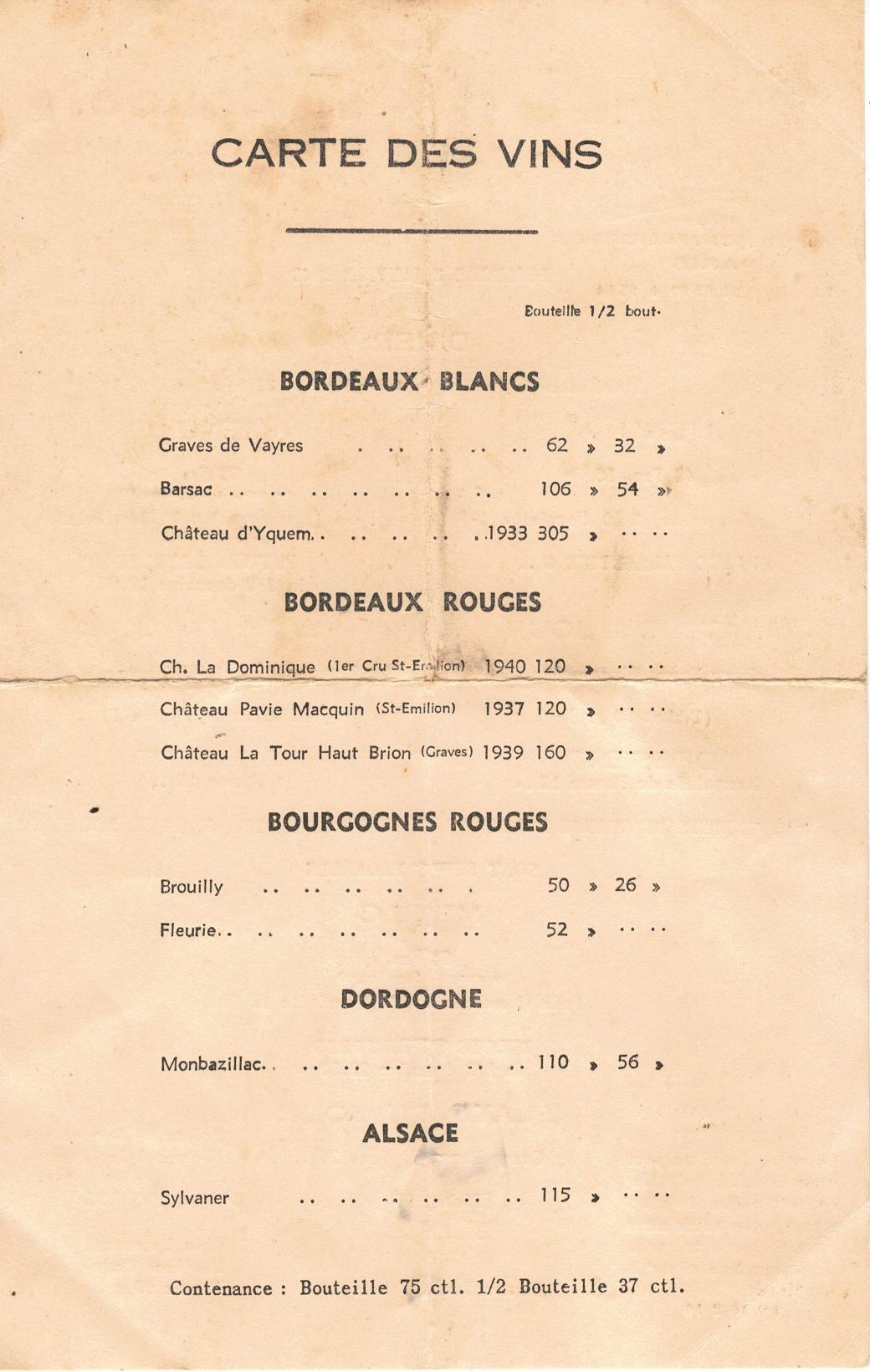
À Paris, the shopping bag on the banquette is not a detail. C'est un acte de positionnement — aussi lisible que la montre au poignet, aussi précis que le vin dans le verre. Le sommelier le voit. La table le voit. Personne n'en parle. C'est la dernière règle non écrite du dîner parisien — et la plus éloquente.
They left in the evening. Norman farmers, their carts loaded with produce, drawn by one horse, sometimes two. The road to Les Halles was long. They needed to arrive before dawn, when the wholesalers opened.
Une nuit, le paysan s'est endormi en chemin.
The horse kept going. Every turn, every crossroad, every stretch of dark road between Normandy and Paris — il connaissait le parcours. Not from instruction. From repetition. Night after night, the same route, the same destination, the same stop.
He arrived exactly at the right stall. Son grossiste. Not the neighbouring one. Not the entrance to the market. The precise spot where his master's goods were expected.
Le paysan s'est réveillé devant la bonne porte.
No one wrote this down. No one needed to. It was the kind of thing maraîchers told each other between crates. The horse remembered what the man's body had forgotten. And the goods were delivered on time.
Les Halles ont disparu. Les pavillons Baltard ont été démolis. The horses, the carts, the night roads — all gone. But this story survived, passed from voice to voice, parce que certaines mémoires n'ont pas besoin de papier.
Paris, 1955. Pavillon Dauphine. He was an apprentice. Son premier poste : ouvrir la porte.
The clientele came for receptions, bourgeois weddings, the kind of evenings where the Bois de Boulogne still meant something. They gave tips almost every time. À chaque porte ouverte, une pièce. Sometimes more. The money accumulated quickly in a young man's pocket.
Then, at the end of service, le maître d'hôtel called him over.
Combien tu as fait aujourd'hui ?
And the maître d'hôtel took his share — une grosse part. This was not theft. This was the system. Le tronc : the unwritten pyramid of the dining room, where every tip flowed upward before trickling down. The apprentice received last. The maître d'hôtel decided how much.
No contract. No negotiation. Un code entièrement oral, jamais contesté.
The boy understood two things at once : that he was being taken from, and that one day he would be the one who takes. This was how a brigade de salle taught its young — not through instruction, but through hierarchy made visible in cash, counted aloud, at the end of every night.
L'homme qui m'a raconté cela avait quatre-vingt-huit ans. His voice carried no bitterness — seulement la précision de quelqu'un qui décrit un monde disparu comme s'il existait encore.
A Monday lunch, 2009. La salle va bientôt se remplir. Une légende d'Hollywood est là, with his wife and his son.
Management offers a central table. He refuses immediately. On dresse une table à l'écart, away from sight. No one else nearby.
He orders a Sancerre blanc, de la maison Pascal Jolivet. La bouteille est dans le seau à vin, rempli de glaçons.
Normally, one pours thirteen or fourteen centilitres. He asks for seven. No more. So the wine stays fresh in the glass. Pour again if needed.
This was not theatre. There was no one to impress. It was a real demand — celle d'un homme qui sait that the temperature of a white changes everything.
On a resservi. Toujours sept centilitres.
La table à l'écart, le verre jamais plein, la fraîcheur maintenue — trois décisions discrètes qui en disaient long sur l'homme, sans qu'un mot soit nécessaire.